
The holy fasting month in Islam, the Ramadan, starts today. It's a month Muslims claim to be meant for inculcating self-restraint, spirituality and for comprehending the pain of the less fortunate in society. But our author Mirza Ghalib has already told us that for the Saudis, the kins of the holy prophet, Ramadan is a month of fun, frolicking, and indulgence. And historically Ramadan was born as a month of Jihad and the most illustrious Jihad wars of Islam -- from the Battle of Badr to that of Tours (732) to the initiation of Jihad for the independence of Pakistan (1946-47) --- were all conducted in sacred Ramadan. Following two articles in our site would help our new readers understand what Ramadan is all about.
I looked, and behold, an ashen horse; and he who sat on it had the name Death; and Hell was following with him. Authority was given to them over a fourth of the earth, to kill with sword and with famine and with pestilence and by the wild beasts of the earth. Revelation 6:8
Showing posts with label Ramadan. Show all posts
Showing posts with label Ramadan. Show all posts
8/01/2011
7/24/2011
Ramadan: When Time No Longer Mattered
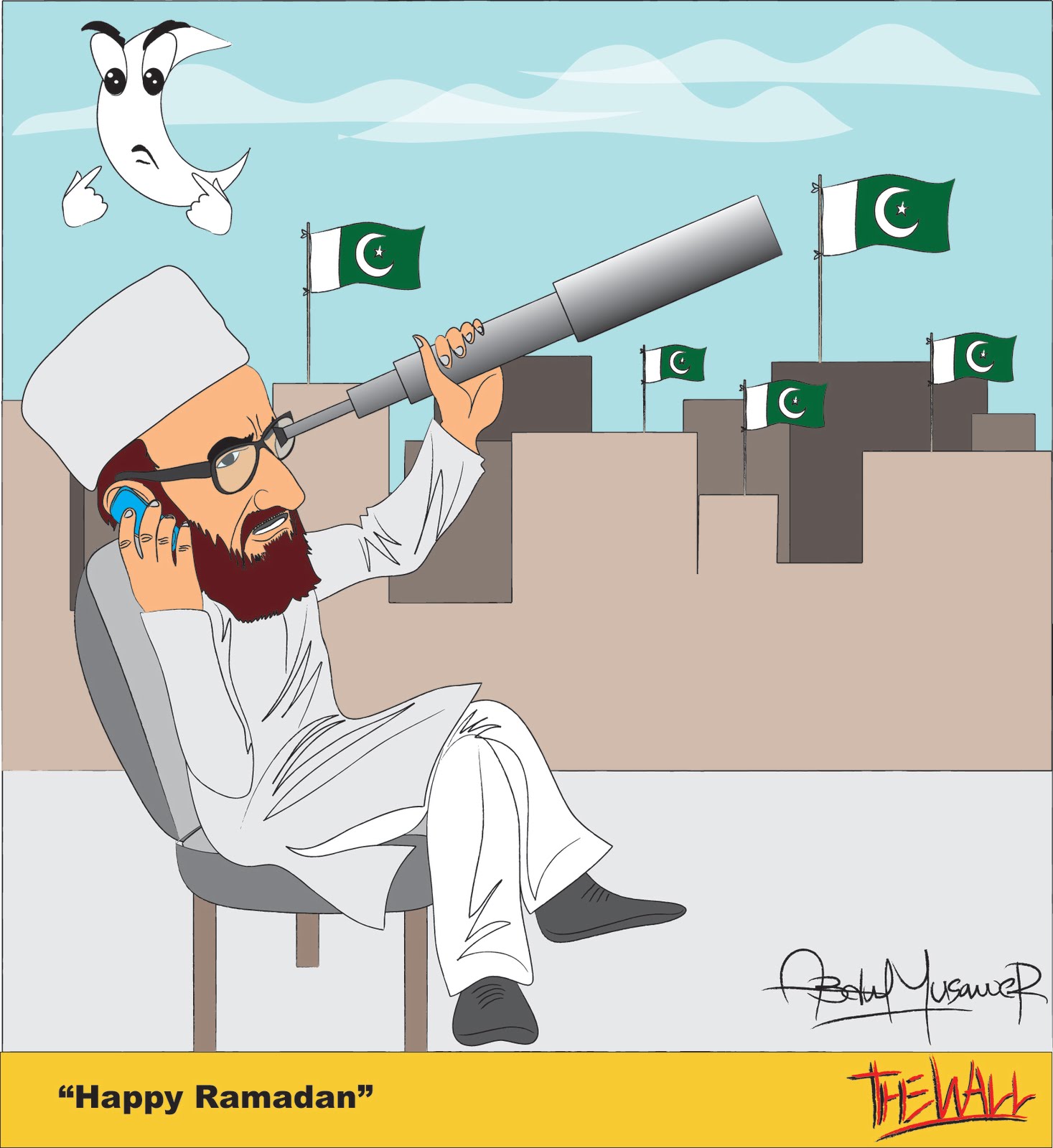
The Muslim fasting month of Ramadan may begin on August 1 this year. Or perhaps it will not. The start of Ramadan must be determined by religious clerics observing the new moon with the naked eye. Also, Ramadan may begin in different countries on different days – because the new moon appears on different days as it orbits the earth. Islamic obsession with physically observing the new moon obscures the embarrassing truth that the accuracy of time doesn’t really matter much in Islam.
|
|
Today’s quartz watches have an accuracy of 10 to 20 seconds a year. A watch that gains or loses even a few minutes a day would be discarded, or at least sent to the jeweler for repairs. So it is remarkable that Muslims use a calendar which is out-of-sync with the solar year by eleven days a year. A wristwatch marking Muslim time would be off by 43 minutes a day!
The explanation for this phenomenal inaccuracy in keeping time is that Muslims observe a lunar year, while the rest of the world observes a solar year. Long ago, observing the moon was a crude but convenient way of marking the passing of calendar months, but almost nobody was foolish enough to believe that 12 cycles of the moon constituted a full year. Long before Islam was introduced, astronomers adjusted between the lunar year and the solar year by inserting the missing days in a “thirteenth month” – a process called “intercalculation.”
But the moon is a central element of Islamic ideology. In the Quran, Allah swears by the moon (Surah 74:32). The crescent moon adorns the tops of mosques and the flags of Muslim countries. Some scholars even assert that Allah is actually the Moon God of the Meccan Quraysh tribe. Because the moon is so central to Islam, using the moon to mark time became an important religious distinction for Muslims – even if it failed to mark time accurately. So in his final address to Muslims, Muhammad made a major point of condemning the practice of intercalculation:
"Intercalculating a month is an increase in unbelief whereby the unbelievers go astray; one year they make it profane, and hallow it another, [in order] to agree with the number that God has hallowed, and so profane what God has hallowed, and hallow what God has made profane... The number of months with Allah is twelve: [they were] in the Book of God on the day He created the heavens and the earth." (Al Tabari, Vol. IX, para. 1754, and Surahs 9:36 and 9:37)
The origins of Islam were basically urban, with many allusions to trade and commerce in the texts. Seasons were not as important to urban dwellers as they were to farmers. Islam had a poor understanding of agriculture, as reflected by the claim that rainfall was important for farming in Egypt (Surah 12:49) or that the moon could be used to determine the seasons (Surah 10.5). So it was probably disconcerting to Muhammad that the farmers around Medina used the Jewish intercalculated solar calendar in preference to the Muslim lunar calendar. Ultimately, Muhammad and Quran condemned that as un-Islamic.
For Muslims, the calendar wasn’t used primarily for planting or harvesting crops. Rather it was used for determining when Muslims could engage in fasting, pilgrimages, and most importantly, collective jihad. Read Surah 9:36 again: "...And fight against those who ascribe divinity to aught beside Allah, all together – just as they fight against you, [Oh, believers] all together."
Modern Islamic apologists extol the virtue of the shortened year, because it allows the fasting month to occur during all the seasons of the year, and thus helps Muslims experience and understand the plight of needy fellow Muslims during all seasons. There are plenty of studies, however, that show that Muslims actually consume 50% more food during Ramadan than during other months in the year. So much for experiencing poverty! Anyone who has seen farmers harvesting their crops at night by lamp-light during Ramadan -- because they physically cannot work the fields without food and water during the harvest season -- would have no sympathy for the merits of a seasonally rotating fasting season.
So this year, I hope my Muslim friends will take time to reflect on the abject failure of Islamic timekeeping to be useful for anything – whether it is knowing when to plant crops or when to schedule a major holiday. A $20 Timex watch almost 50,000 times more accurate.

8/09/2010
Ramadan Fasting: A pure Islamic Deception!
The Muslim claim, that Ramadan fasting brings a whole host of benefits and wellbeing to them, is a myth and pure deception. Instead, the unscientific eating habit of Ramadan is a health and economic curse for Muslims, which is all to evident to the naked eye...
What Muslims say or practise may not always have a positive meaning. Most of the times, their claims could be quite opposite, bogus, or deceptive to non-Muslims. Their religious rituals and sayings, in reality, could have totally opposite meaning. Let us examine one case in point, Ramadan, which is a major pious ritual of Islam.
Muslims practise month-long fasting, from sunrise to sunset, in the Arabic month of Ramadan. The main purpose of Ramadan fasting, claim Muslims, is to practice economic bail-tightening, self-struggle, and self-purification—in order to be economical and also to starve oneself for realizing the painful condition of the hungry and starving people.
In other words, fasting is for reducing economic expenditure or pressure, as well as practising self-restraint by reducing indulgence in personal luxury, lusts, or comfort etc. But, in reality, Muslims do the opposite! Muslims, fasting during Ramadan, practice a total orgy of eating and drinking more delicacies, albeit during night instead of day time. At nighttime meals, a typical fasting Muslim may consume double the amount of most nourishing, delicious and luxurious food items compared to his normal eating habit. Monthly expenditure for a typical family duly doubles or triples during Ramadan as compared to monthly expenditure during rest of the year. That means, during the month of Ramadan, Muslims are engaged in greater spending spree than other months of the year. Instead of sacrificing self-comfort and self-interest and luxuries, Muslims indulge in gorgeous month-long celebration of vigorous spending and eating orgies.
Remarkably, it is worth noting their weird culture of Iftar-Party Politics (IPP), i.e. fast-breaking ritual, during Ramadan. One can witness how much foods they gobble (waste) in this month-long unholy activities of IPP. It is almost a competition of eating tasty and expensive food items of as many varieties as they can afford in this IPP. This is what they call exercise of self-restraint for realizing the pains of the poor and hungry! As if, poor people eat so much foods (which they try to simulate so piously) and still remain hungry!
Prices of commodities shoot up during Ramadan
Prices of common commodities such as food-stuffs and other daily necessities go up to the roof in Muslim countries during the fasting month, adding untold misery to the poor people. No government control can prevent this pernicious price increase in the month of Ramadan. Fact is: Muslims actually consume more foods and luxury items during Ramadan than other times of the year. A fasting man will consume more foods in total than a non-fasting man in the same family. Because, fasting man will consume all the most nutritious and expensive tasty foods during nighttime, which normally they hardly do during other months, the supply and demands get unbalanced, and business people can not keep the price down because of very high demands. Thus, the ultimate purpose of fasting—namely self-restraint or sacrifice, and particularly realization of the pain of the hungry—works to the contrary: i.e. the poor suffer more during Ramadan, thank to the price increase of daily necessities.
Some facts & myths of Ramadan and reality!
National Productivity: National productivity of all Muslim nations goes down in this month due to serious disruptions of business as usual. All educational institutes remain shut-down for the entire month. Muslims do not work hard during this month: they reach office mostly late and go home early. All Arab nations (Muslims) basically do not work at all during this month. Arabs even do not sleep during the night also. They remain awake and busy eating and drinking all night long; and after their Sehari (early-morning meal)—they go for a long deep-sleep in holy comfort.
Charity and donations: Mullahs and Islamic scholars brag that, the so-called fasting during Ramadan teaches Muslims to do charity for the poor people; but in reality, Muslims are little charitable; their contribution to global aid is very little or negligible in quantity. It is the non-Muslim kaffir countries of the East and West (especially American kaffirs) give 80% of the world’s charity to the poor nations.
Health benefits: Some Islamists unscrupulously brag that ‘fasting during Ramadan is highly beneficial to health’. This claim, of course, has no scientific basis and an untrue statement by Muslims. In fact, this kind of fasting is very harmful to health. The fact—that Muslims are least unhealthy people on earth, and that their longevity is one of the lowest in the world—proves it all.
Allah keeps Satan chained during Ramadan: Islamic mullahs claim that, during this holy month, Allah keeps the Satan chained (arrested and confined), preventing it from making Muslims do bad things in this month. This claim is utterly bogus and clearly untrue. Just look at what is happening around the world, especially in the Muslim world (Iraq, Afghanistan and Pakistan). Right from day one of Ramadan, there took place a heightened barrage of suicide bombings to kill scores of innocent people; the same has been the case during Ramadan over the past years.
In Bangladesh, for example, corruption is going on unabated, while killings by beheading, for example in the district of Kushtia, are occurring on almost a daily basis. Crime and violence remain rampant in the Muslim world during this month of Ramadan. A few days ago, even in Saudi Arabia (the birth place of Islam) terrorists were about to kill Saudi prince by suicide terrorism, which occurs there rarely. By no statistics or scientific data can one claim that crime-rates go down during the month of Ramadan! Is it possible that Allah, as promised, forgot to chain all those Satan he created? Or is it a lie from Islam and Allah.
Ramadan makes Muslims honest and pure: This is purely a myth, a bogus assumption if not propaganda, by the Islamists. Muslims are the most corrupt people on earth by all possible parameters, and by all scientific statistics. Nobody can deny that!
The fact
Thus, the month-long fasting of Ramadan is obviously a mockery of what Muslims claim. This unscientific fasting during day-time and the eating orgy (voracious munching of foods) at nighttime, instead, is unhealthy and unnecessary, and a most unproductive practice. Ramadan fasting ritual only helps Muslim nations pushed into greater poverty and dependence on others. Economically, Muslims get weaker due to unbalanced expenditure, and much reduced productivity and business activity during the month of Ramadan. Ramadan fasting, therefore, is another Islamic self-deception, to say the least, and a curse to their wellbeing, at best.
Here is a research-report that has found productivity loss in Muslim countries by 78% during Ramadan, while heart-attack increase by 28% due to over-eating:
(ANSAmed) - TUNIS, SEPTEMBER 3 - During Ramadan, the productivity of Arab businesses drops by 78%. The essential factors? Fewer work hours, absenteeism, and sick leave. In the meantime, diseases linked to cholesterol and diabetes by 27.65% because of overeating. Experts claimed that increases in blood crimes (+1.5%) and theft (+3.5%) are mainly the result of abstinence from smoke. The figures are included in a survey carried out by Cairòs Institute of Social Sciences of the Arab World which was printed today by 'Leaders', a Tunisian website. (ANSAmed).
Subscribe to:
Posts (Atom)


